Congratulations! CLASS Laboratory wins two awards for energy efficiency and sustainability
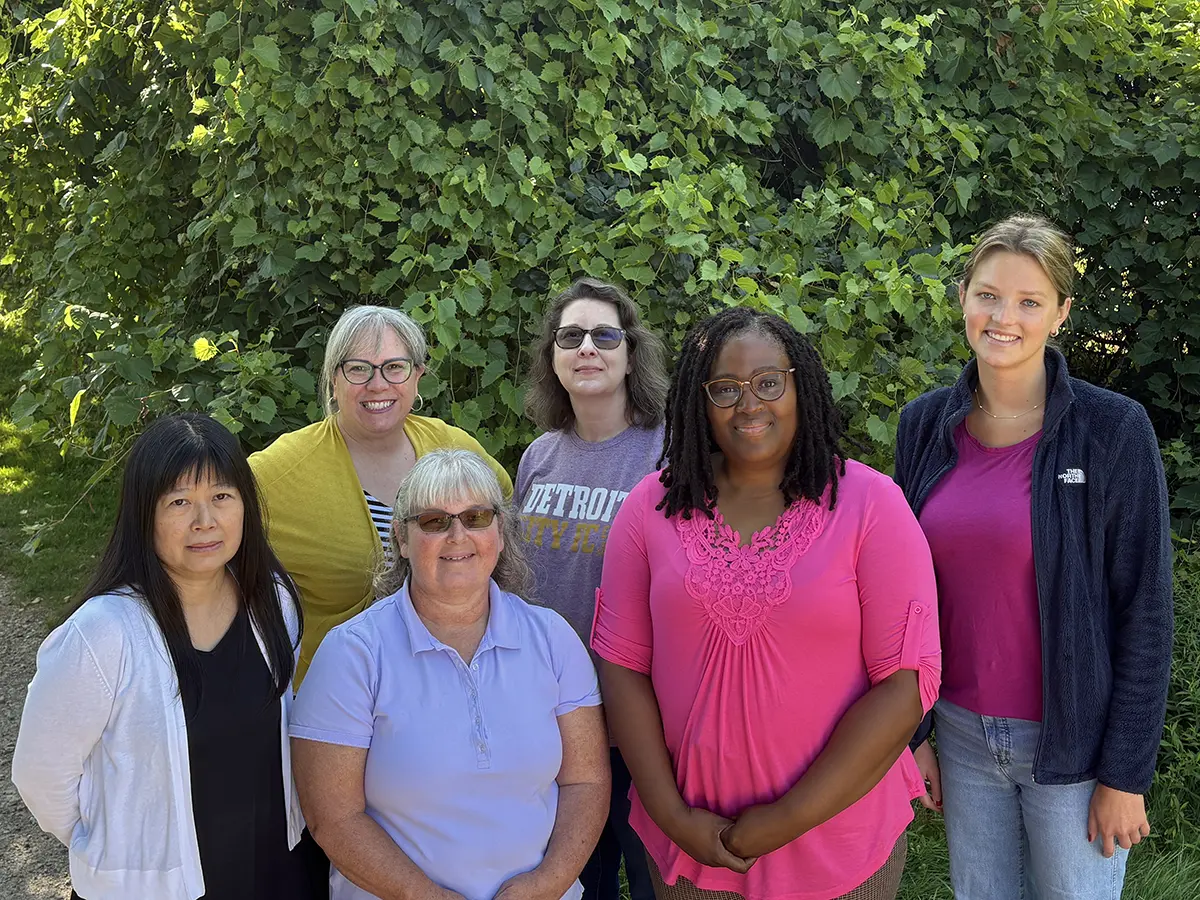
The CLASS Lab Team
The CLASS Lab Team
The Central Ligand Assay Satellite Services (CLASS) laboratory has won the Overall U-M Large Lab Award Category and the SPH Large Lab Award Category for the 2026 Freezer Challenge, and the Sustainable Lab Gold Certicate from the Office of Campus Sustainability and Innovation.
Video: “Perimenopause or Menopause? An Expert Offers Clarity” with CLEAR Faculty John Randolph, MD
John Randolph, MD
John Randolph, MD
“Menopause actually is an event,” Randolph said, saying that medically, menopause is defined as a woman’s final menstrual period, confirmed after 12 consecutive months without bleeding. Perimenopause, by contrast, is the yearslong transition leading up to menopause and can often continue for several years after as hormone levels continue to fluctuate. He compared the transition to puberty because both involve significant hormonal changes that can affect nearly every aspect of the body.
“It’s a good way to think about it because the changes can be very unpredictable and difficult to deal with,” he said.
Video: “Perimenopause and Heart Health Livestream
” with CLEAR Faculty John Randolph, MD and Catherine Kim, MD, MPH
John Randolph, MD and Catherine Kim, MD, MPH
John Randolph, MD and Catherine Kim, MD, MPH
It’s no secret that perimenopause has become a hot topic over recent years; the word is plugged into search engines more than 200,000 times each month. It’s less common knowledge, though, that hormonal changes during the perimenopause stage can significantly affect cardiovascular risk.
CONGRATULATIONS! Excellence in Teaching Award goes to Center Core Faculty member Sung Kyun Park, ScD, MPH
Sung Kyun Park, ScD, MPH
Sung Kyun Park, ScD, MPH
Center Core Faculty member Sung Kyun Park, ScD, MPH, professor of Epidemiology and Environmental Health Sciences, was named the 2026 recipient of the Excellence in Teaching Award acclaimed for his strong teaching and mentoring skills. Over the course of his fifteen year career as a faculty member at the University of Michigan School of Public Health, he has developed and led impactful coursework, mentored students in and out of the classroom, and been committed to the continuous improvement of education across the school.
PODCAST: Center Director Carrie A. Karvonen-Gutierrez, PhD, MPH on the ICPSR NACDA podcast (AUDIO 🔊)
Carrie A. Karvonen-Gutierrez, PhD, MPH
Carrie A. Karvonen-Gutierrez, PhD, MPH
“What we see differently during midlife is that the pattern of physical functioning limitations is really quite dynamic. We see that over that midlife phase, people are as likely to decline in their physical functioning as they are to improve. And what this really suggests to us is that midlife is a really important life stage to think about improving health, because it is dynamic, it is malleable.”
In the news: “The invisible workforce behind Michigan’s $125B agriculture industry” on MLive
Alexis Handal, PhD, MPH and Lisbeth Iglesias-Ríos, PhD, MPH, MA
Alexis Handal, PhD, MPH and Lisbeth Iglesias-Ríos, PhD, MPH, MA
“They’re a very, very invisible population,” said Alexis Handal, a University of Michigan professor who co-leads the Michigan Farmworker Project alongside researcher Lisbeth Iglesias-Ríos.
IN THE NEWS: “Adults face lasting effects months after RSV hospitalization” with Center Core Faculty Aleda (Allie) M. Leis, PhD, MS
Aleda (Allie) M. Leis, PhD, MS
Aleda (Allie) M. Leis, PhD, MS
“Since there are limited treatment options for RSV, it's important to understand the potential long-term outcomes of severe RSV infection so that clinicians and public health workers can identify who might benefit from additional follow-up after their illness. This information can also help inform efforts to prevent disease or reduce severity, such as through vaccination, which is now available to certain groups of adults.”
Project: Michigan Bone Health & Metabolism Study (MBHMS Bone Strength)
The 36-year MBHMS follows the daughters of participants in the historic Tecumseh Community Health Study to evaluate the impact of aging-related processes including menopause and the secular increase in obesity on the development and progression of musculoskeletal disease and declines in physical functioning. This study addresses a significant gap in scientific knowledge that impedes our ability to optimize fracture prevention strategies. If our hypotheses prove correct, baseline external bone size may be used as an additional parameter to identify women most likely to lose bone strength rapidly during the MT and who might benefit from early intervention.
Project: Michigan Lupus Epidemiology and Surveillance Program Longitudinal Cohort (MiLES)
Initiated in 2013, MiLES is a newly established cohort study which creates and maintains the MiLES Longitudinal Cohort & Biobank, including lupus cases from the southeast Michigan surveillance registry as well as population-based controls.
The Michigan Farmworker Project (MFP) is a community-engaged project that aims to provide a deeper understanding of the complex working and living conditions of migrant and seasonal farmworkers in the state of Michigan and the relationship with health outcomes in this population. The MFP seeks to identify indicators of labor exploitation in farmworkers and relate this understanding to farmworker’s psychosocial, occupational and environmental risk factors as well as gaps in service provision and recommendations from farmworkers themselves to address their current working and living conditions.